The Creation of the Super Sucker 5000: An RV DIY Adventure
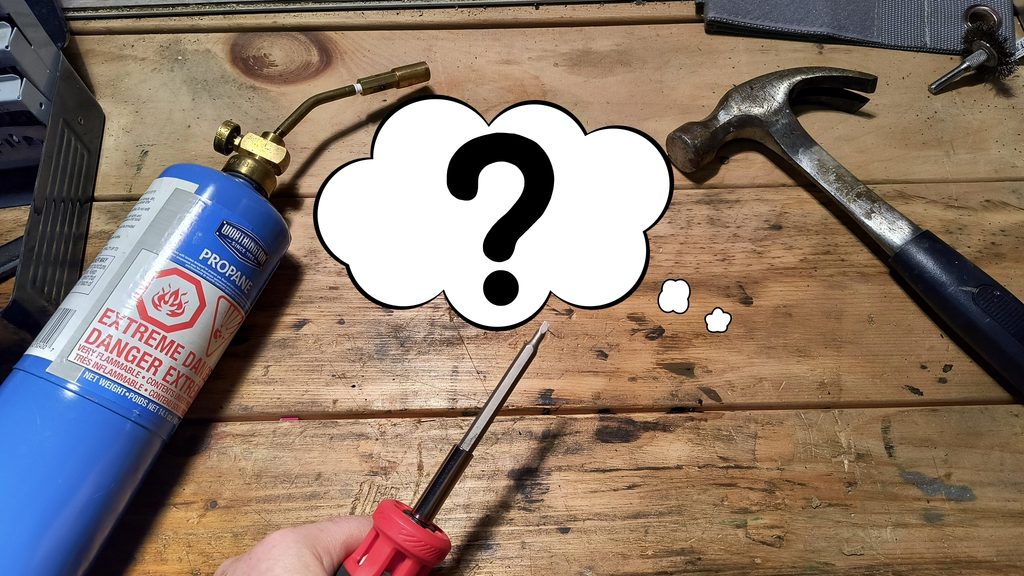
Have you ever been halfway through a project and suddenly realized you need a highly specific tool that absolutely nobody owns… except maybe one guy at the edge of the arctic circle, who builds things out of pure regret and determination?
Yeah. That kind of project.
This is the story of how a simple trailer quick fix turned into a full-blown mechanical saga involving surprise water showers, stubborn bolts, questionable engineering decisions, and the accidental invention of the Super Sucker 5000.
The Trailer Tailgate Problem (a.k.a. Camping Frustration Simulator)
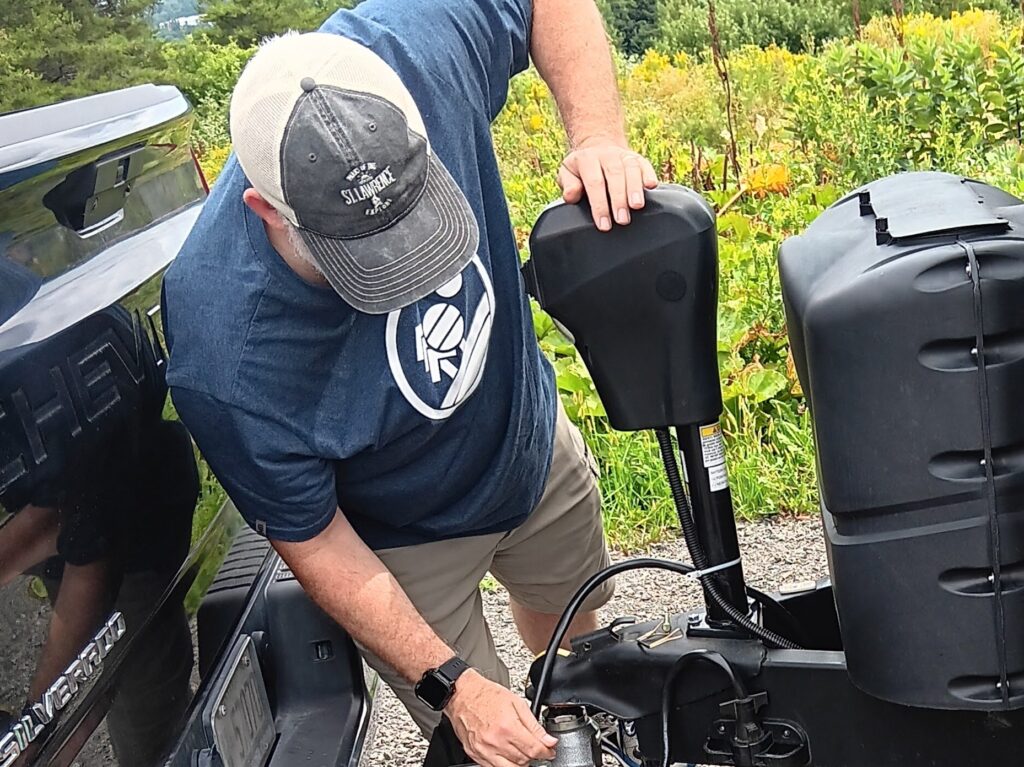
I had reached my breaking point with our trailer.
Every time I hooked it up to the truck, the tailgate wouldn't fully open. Why? Because it would smack directly into the power jack like it had a personal vendetta against me.
And, of course, the one thing I needed in the truck bed—usually a wheel chock—was always sitting at the very back.
So there I was, performing the official Roaming Roads tailgate retrieval manoeuvre:
- One hand holding the tailgate halfway open.
- The other attempting some kind of awkward circus reach.
- My dignity somewhere on the driveway.
I was one stretch away from becoming a viral DIY fails video, or heading to the dr's office because my back went into full spasm.
The YouTube Solution (Famous Last Words)
Late one night, I fell into a YouTube rabbit hole and found the solution.
A guy calmly explained:
“It's a simple 20-minute modification.”
Any experienced DIYer knows what that really means.
In RV time that translates to exactly two hours, three trips to the hardware store, and a 24-case of structural support beers.
The fix sounded simple enough: rotate the power jack head 90 degrees for extra tailgate clearance.
No more contact. No more frustration. No more trailer gymnastics.
Easy, right?
Phase 1: Overconfidence Assembly Mode
It was a perfect day. I had tools. I had motivation. I had optimism—which, in hindsight, is always dangerous.
My toolkit included:
- Drill
- Wrench
- Bottle jack
- Wood blocks
- An unreasonable amount of confidence
I lifted the trailer tongue just enough to relieve pressure on the jack.
Everything was going smoothly.
This should have been my first warning.
Phase 2: The Too-Easy Bolt Removal.
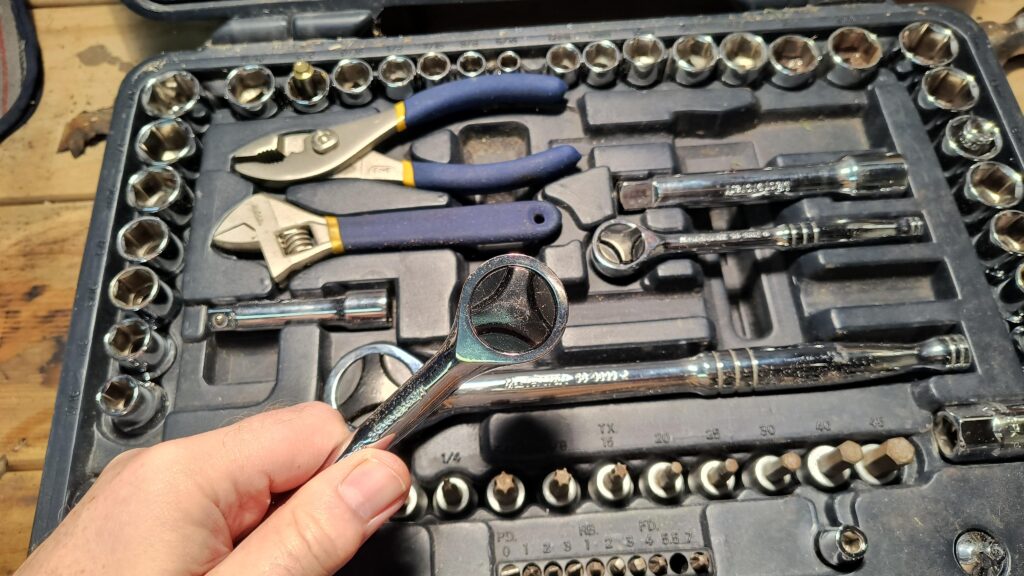
I popped off the rubber caps, grabbed my ratchet, and expected war.
Instead…
The bolts came out immediately.
No rust. No fighting. No swearing.
Just… cooperation.
That's never a good sign.
I actually paused and looked around like the trailer was planning something.
Phase 3: The Trailer Shows Its True Nature
Next step: lift off the jack head.
It moved instantly.
Suspiciously instantly.
Then came the wiring. It was slightly stubborn, but manageable.
And then it happened.
A full torrent of water poured out of the jack head directly onto me.
Apparently, the engineering design philosophy was:
“Let's build a waterproof container that collects water directly onto electrical components.”
It was less a trailer jack and more a rust-themed aquarium for metal failure.
So naturally, I fixed it.
I drilled drainage holes in the plastic bottom.
Because future me deserves better than swamp-jack syndrome.
Plus as much as I love a good science experiment, "submerged electrical equipment vs. rust" is a game of financial roulette I'd rather skip.
Phase 4: The Missing Holes Problem
Next discovery: the alignment holes I needed didn't exist.
Of course they didn't.
Because why would a manufacturer include something useful?
So I stuffed paper towel into the pipe (very technical, very official), grabbed the drill, and carefully created my own holes.
Then I tapped new threads like a man pretending he knows exactly what he's doing.
And for a brief moment…
I did.
Phase 5: Temporary Victory (The Calm Before Chaos)
Everything fit perfectly during the test fit.
Bolts fit. Threads worked. Confidence restored.
I mentally prepared my victory speech.
And then the universe said:
“Cute. Try again.”
When I tried to put everything together for final assembly, the bolts no longer aligned.
"It wasn't an obvious, glaring failure. It was a subtle, invisible glitch designed specifically to ruin a perfectly good afternoon.
The Hammer Phase (A Scientific Method)
I tried:
- Encouragement
- Threats
- Negotiation
- Emotional bargaining
- Hammers (small)
- Hammers (larger)
Nothing worked.
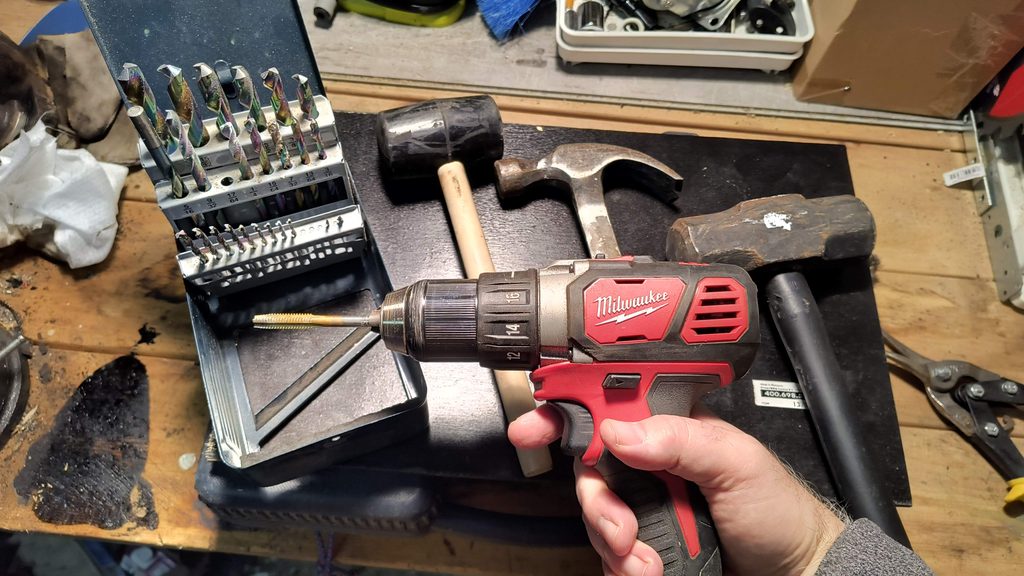
Eventually, I resorted to chucking a tap directly into a power drill, throwing my entire body weight behind it, and forcing alignment through sheer, unadulterated stubbornness. The result? New-ish, better-aligned-ish holes.
It worked.
Barely.
Enter: The Super Sucker 5000

Just when I thought I was done…
Upon closer inspection, my high-tech paper towel filter which I was using to keep the metal shavings from the drill out of the jacks gears had vanished into thin air. In its place, a small army of sharp metal shavings were just chilling inside the pipe like they'd already signed a lease.
My options were:
- Ignore it, accept mechanical doom, and live in constant, thrilling suspense of whether the jack will fail tomorrow or halfway through leveling at a campsite.
- Or fix it properly.
So naturally, I invented a solution.
I grabbed:
- Clear tubing
- A dust buster
- Duct tape (Canada's official engineering material)
A few minutes later…
The Super Sucker 5000 Was Born
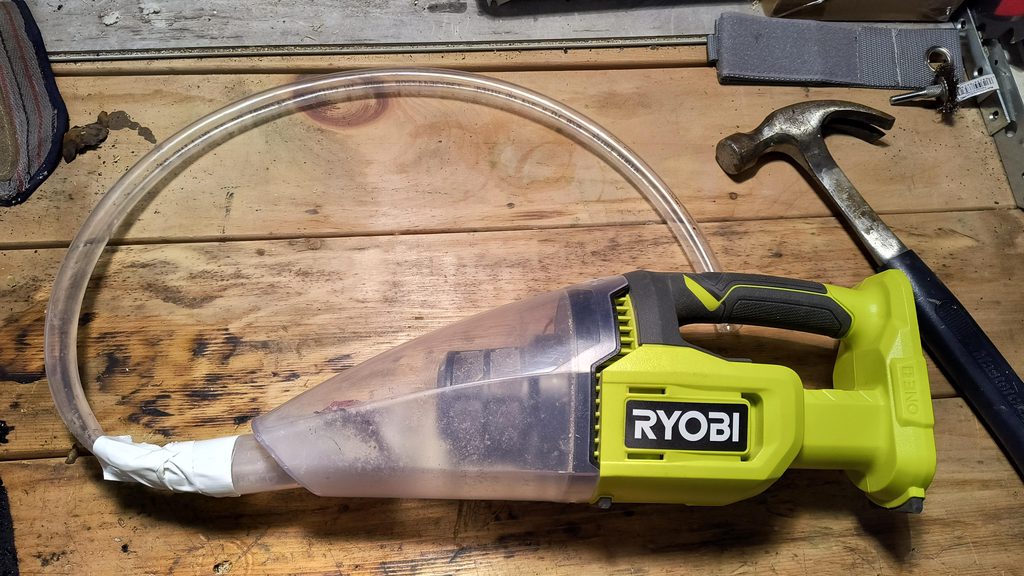
A simple idea, a dust buster with a hose attached to the end of it.
It snaked into the pipe and vacuumed out every last metal shaving like a tiny industrial hero.
And it worked beautifully.
It worked so well I'm going to keep this creation around for my future projects.
It may look like something NASA would build if their entire budget was five dollars and run by a bunch of rednecks that went to school who's principle was Red Green.
But it works
Final Result: Victory (With Minor Side Effects)
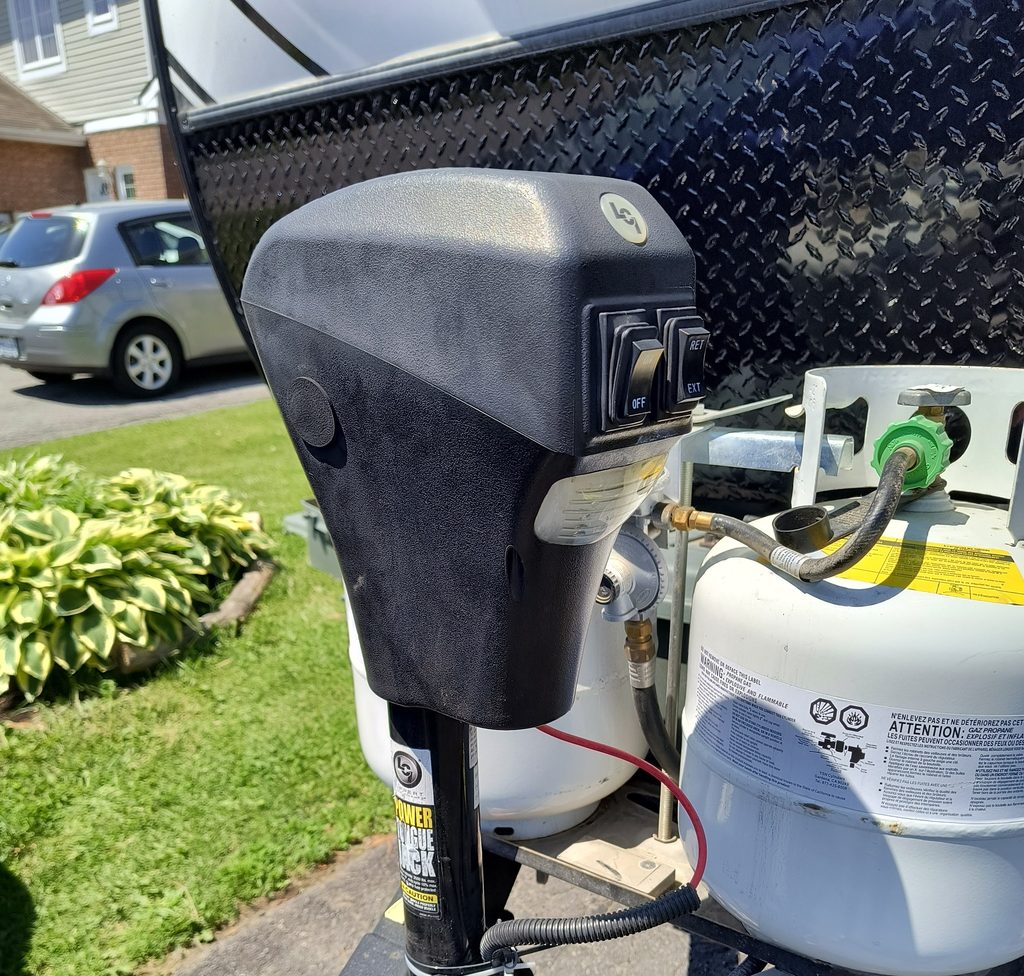
The jack went back together smoothly.
The next time I lowered the tailgate…
It cleared.
Mostly.
Now it only gently kisses the trailer frame instead of violently attacking it.
Which I'm calling a success.
Because future problems belong to Future Me.
And Future Me has the Super Sucker 5000.
Have you ever started a simple RV repair that turned into an all-day engineering adventure? Tell us about it in the comments. Bonus points if duct tape or a homemade tool was involved.
Because owning a travel trailer means something is always breaking, the projects never truly end. Head over to another of our RV repair adventures to read all about how our structural issues led to the great "Broken Beds" rebuild!
Until the next adventure... keep the wheels turning and the campfires burning!
— Roaming Roads